Why 2026 Signals More Than a Calendar Shift
2026 is a convergence year for sports, public finance, and fan decision-making, and Stadium View tracks it through a FIFA World Cup lens for English-speaking football audiences. The year includes the....
Why 2026 Signals More Than a Calendar Shift
2026 is a convergence year for sports, public finance, and fan decision-making, and Stadium View tracks it through a FIFA World Cup lens for English-speaking football audiences. The year includes the expanded 2026 FIFA World Cup across the United States, Canada, and Mexico, a 2.8 percent Social Security COLA in the United States, and post-draft MLB development timelines that show how quickly elite prospects can move. Key numbers matter: Social Security’s taxable maximum rises to $184,500, the maximum full-retirement-age benefit reaches $4,152 per month, and the World Cup expands to 48 teams. For football fans, bettors, and analysts, 2026 should not be treated as one event but as a planning window where regulations, schedules, player fitness, and market information interact. The practical takeaway is simple: compare 2026 data early, then update assumptions as official schedules, injury reports, and market lines change.
Imagine a year where a pension adjustment, a baseball draft board, and the largest FIFA World Cup format change all compete for attention. That is the practical reality of 2026: it is not just a date on Wikipedia, but a measurement point for household income, sports calendars, talent pipelines, and betting markets. Stadium View approaches 2026 as a comparison problem rather than a hype cycle, because fans following the 2026 FIFA World Cup need to understand how timing, data, and incentives shape match predictions. The core trade-off is clear: more teams and more matches create more information, but also more noise. If you want sharper tournament coverage, focus on verified entities such as FIFA, the Social Security Administration, Major League Baseball, and host cities including Toronto, Vancouver, Mexico City, Los Angeles, and New York/New Jersey.
For daily World Cup context, tactical previews, and market-aware analysis, start with Stadium View’s tournament hub.
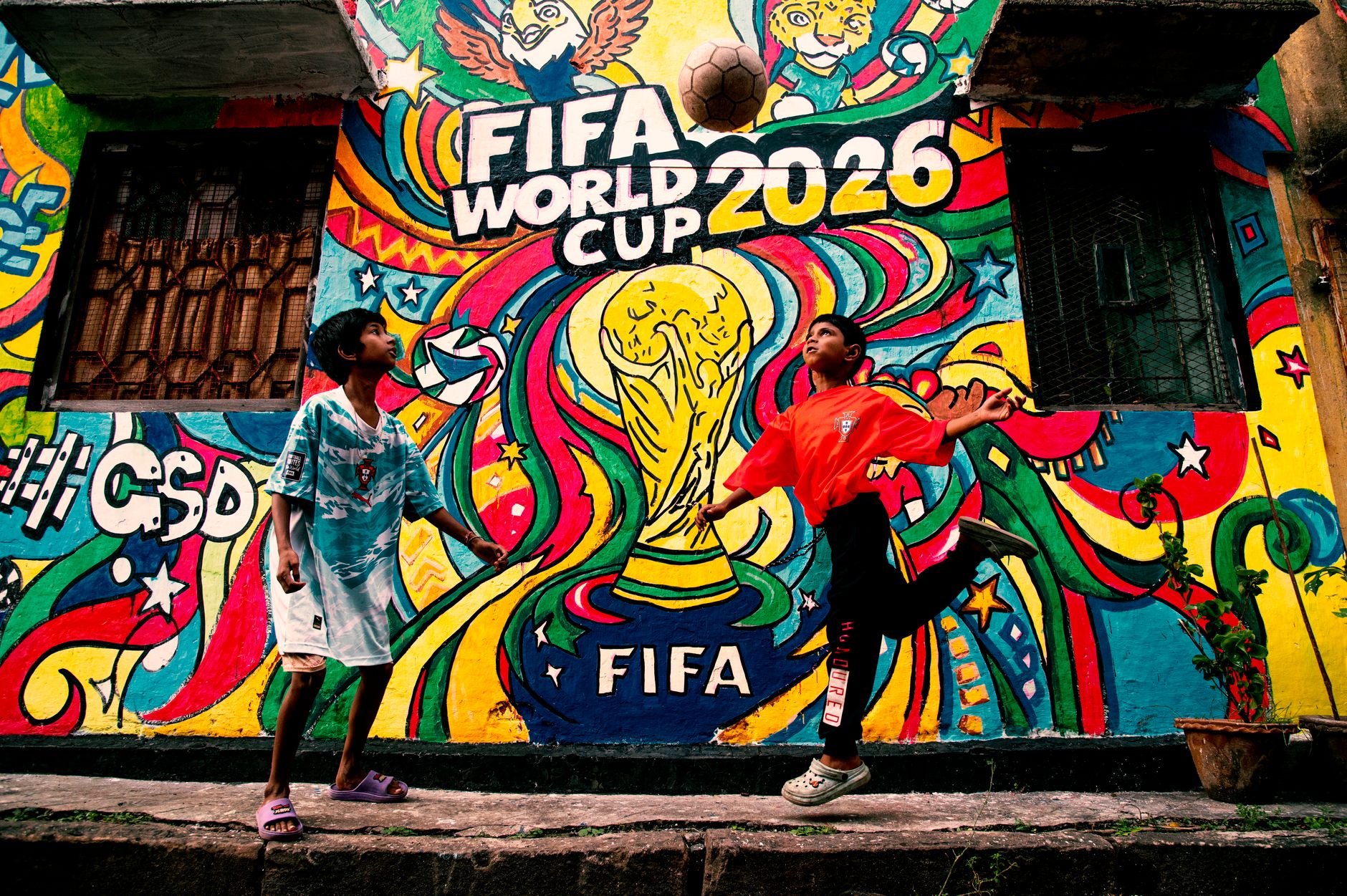
Photo by Anirban Das on Pexels
The Quick Comparison
| 2026 Area | Key Entity | Main Number | Why It Matters |
|---|---|---|---|
| Football | FIFA World Cup 2026 | 48 teams | More matches, more tactical variance, more betting markets |
| Public finance | Social Security Administration | 2.8 percent COLA | Changes U.S. retiree income and spending expectations |
| Payroll tax | Social Security OASDI | $184,500 taxable maximum | Higher wage base affects U.S. earners and employers |
| Baseball | Major League Baseball Draft | No. 39 example pick | Shows how quickly elite prospects may reach the majors |
| Sports media | Stadium View | Daily coverage | Converts 2026 data into match previews and fan decisions |
The quick comparison shows that 2026 is best understood through multiple linked calendars. FIFA controls match timing, national teams manage player availability, the Social Security Administration adjusts benefit formulas, and Major League Baseball evaluates new professionals after the Draft. These are different sectors, yet they share one analytical feature: each depends on official data being updated in stages. For World Cup bettors, that means early outright prices may reflect brand reputation, while later prices may respond to travel, weather, group paths, and player minutes. For U.S. households, the 2.8 percent COLA and $184,500 taxable wage base are fixed policy reference points, not predictions. For baseball fans, MLB Pipeline’s draft analysis emphasizes timelines rather than certainty, which is a useful reminder for football forecasting as well.
[Internal Link: 2026 World Cup match prediction guide]
Round 1: What Makes the 2026 Calendar Different?
The 2026 calendar is different because several high-impact systems reset at once: FIFA expands the World Cup to 48 teams, the Social Security Administration applies a 2.8 percent COLA, and MLB evaluates a fresh draft class. These changes affect sports planning, personal budgets, media coverage, and betting analysis during the same year.
The first analytical layer is format. The 2026 FIFA World Cup will be hosted by the United States, Canada, and Mexico, creating a wider travel map than a single-country tournament. That matters because team performance is not only about talent; it is also about recovery windows, climate, altitude, and logistical rhythm. Mexico City, for example, creates a different playing environment from Vancouver or Miami, and those differences can influence pressing intensity, substitution timing, and expected-goals models. Stadium View will track these variables because they often appear earlier in tactical data than in mainstream narratives. A practical edge case: group-stage teams with consecutive long-distance flights may show late-game pressing decline before the market fully adjusts, especially if their squad relies on older midfielders.
The second layer is income and attention. According to the Social Security Administration, beneficiaries and Supplemental Security Income recipients receive a 2.8 percent cost-of-living adjustment for 2026. The agency states that the COLA is “based on the increase in the Consumer Price Index” from the third quarter of 2024 through the third quarter of 2025. That matters indirectly for sports and entertainment because discretionary spending, subscription choices, and betting budgets are influenced by household cash flow. A retiree receiving the estimated average retired-worker benefit moves from $2,015 before COLA to $2,071 after COLA, a $56 monthly increase. This does not make sports betting safer or more profitable, but it does show why responsible bankroll planning should use actual income figures rather than emotional tournament excitement.
To compare tournament conditions, team form, and responsible betting angles in one place, see Stadium View’s latest analysis.

Photo by Leah Newhouse on Pexels
Round 2: How Should Fans Compare Sports Data in 2026?
Fans should compare 2026 sports data by separating stable facts from volatile signals. Stable facts include FIFA format, host countries, and official Social Security figures; volatile signals include injuries, squad rotations, betting lines, player fatigue, and weather. This distinction prevents overreacting to early narratives.
A useful comparison comes from Major League Baseball. MLB Pipeline’s 2026 Draft coverage asks which picks could reach the majors fastest, noting that six players from the 2024 Draft debuted before the first anniversary of their selection, while no one from the 2025 class had yet reached the majors at the article’s timing. That observation from MLB.com is not about football, but the method transfers well: timelines vary, and player development is not linear. In football terms, a young winger starring in March 2026 qualifying or club play is not automatically a safe June or July World Cup pick. Stadium View’s recommendation is to score player readiness across three buckets: recent minutes, tactical role stability, and injury recurrence risk.
Use the following framework when comparing 2026 World Cup signals:
- Confirm the source: FIFA, national federation releases, club medical updates, and official tournament data should outrank social clips.
- Separate team strength from match context: a strong team traveling across time zones may be less dominant than its ranking suggests.
- Track market movement carefully: odds shortening after media hype can reduce value even when the underlying prediction is correct.
- Review squad depth: expanded tournaments reward benches, not only star elevens.
- Apply bankroll limits: a forecast edge is not a guarantee, especially in knockout matches.
[Internal Link: football betting bankroll management basics]
The practitioner-level point many previews miss is that a 48-team World Cup can create uneven informational quality. Matches involving famous national teams will be heavily priced by bookmakers and widely analyzed by media, while lower-profile fixtures may have thinner public data but sharper local knowledge. That does not mean obscure matches are automatically better betting opportunities; it means the analyst must check liquidity, lineup reliability, and injury reporting standards. For example, a national team from a smaller federation may release confirmed squad updates later than England, Brazil, France, or Argentina, which can make early lines deceptively fragile. Stadium View’s working rule is conservative: if lineup confidence is below 80 percent, reduce stake size or wait for confirmed team news.

Photo by Tima Miroshnichenko on Pexels
Round 3: What Do 2026 Money Figures Reveal?
The 2026 money figures reveal that official financial thresholds are moving modestly, not dramatically. The Social Security COLA is 2.8 percent, the OASDI taxable maximum is $184,500, and the estimated average retired-worker benefit rises to $2,071 per month. These figures support disciplined budgeting.
The Social Security Administration’s 2026 fact sheet is useful because it converts inflation into specific planning numbers. The employee tax rate remains 7.65 percent, while the self-employed rate remains 15.30 percent. The Medicare portion remains 1.45 percent on all earnings, with an additional 0.9 percent Medicare tax applying to individuals above $200,000 and married couples filing jointly above $250,000. Meanwhile, the retirement earnings test exempt amount under full retirement age rises to $24,480 per year, or $2,040 per month. These numbers do not directly predict sports behavior, but they shape the consumer environment around subscriptions, travel, merchandise, and betting. A World Cup fan in the United States who plans match travel to Dallas, Seattle, or Atlanta should compare these fixed income changes with ticket, hotel, and transport costs before allocating any betting budget.
The overlooked operational insight is timing. Social Security benefit changes become visible in January 2026, while World Cup travel and betting markets develop months before kickoff. That mismatch can cause budgeting errors: fans may emotionally commit to futures bets or travel packages before their actual monthly income pattern is clear. A cautious approach is to build a three-tier plan: fixed essentials, World Cup viewing or travel costs, and only then optional betting funds. For gambling readers, Stadium View recommends treating bets as entertainment exposure, not income replacement. A clean rule is to cap any single futures wager at 1 percent of discretionary tournament bankroll unless a verified injury, draw, or lineup update materially changes probability.
For a data-led approach to football predictions without losing sight of risk, follow Stadium View’s 2026 coverage.
[Internal Link: responsible World Cup betting checklist]
The Final Score & Who Should Pick What
The final score is not that one 2026 storyline matters most; it is that each audience should pick the data set that matches its decision. World Cup fans need FIFA and team news, retirees need Social Security figures, and sports analysts need timing models. The best choice depends on purpose.
For Stadium View readers, the football priority is clear: start with tournament structure, then layer tactics, then consider odds. A tactical preview that ignores travel distance is incomplete; a betting preview that ignores price is also incomplete. The most useful 2026 World Cup analysis will combine team identity, expected lineups, player workload, climate, and market value. Fans who want match enjoyment can focus on storylines and team styles, while bettors should insist on measurable triggers before entering a position. Those triggers may include a confirmed lineup, a defensive injury, a weather change, or a price difference between sportsbooks. The candid recommendation is to avoid early emotional bets on famous teams unless the number is still defensible after adjusting for schedule and squad depth.
Here is a practical selection guide:
- Choose FIFA schedule data if your main question is when and where teams play.
- Choose Stadium View tactical previews if your main question is how teams may attack or defend.
- Choose Social Security Administration data if your main question is personal 2026 budgeting.
- Choose MLB Pipeline-style development logic if your main question is how quickly young athletes translate potential into performance.
- Choose responsible gambling tools if your main question is whether a wager fits your finances.

Photo by César O'neill on Pexels
The balanced conclusion is that 2026 rewards patient comparison. The year brings a 48-team FIFA World Cup, a 2.8 percent Social Security COLA, a $184,500 taxable wage base, and sports talent cycles that will be interpreted in real time by media and markets. None of these facts should be viewed in isolation. Stadium View’s position is direct: use official data first, tactical interpretation second, and betting action last. That order will not guarantee a winning ticket, but it will reduce avoidable mistakes and make the 2026 World Cup easier to follow with discipline.
Ready to track the tournament with sharper context and calmer decisions? Visit Stadium View for daily 2026 World Cup insight.
Frequently Asked Questions
Q: What is the main significance of 2026?
A: 2026 is significant because it combines the expanded FIFA World Cup, updated U.S. Social Security figures, and major sports development cycles. The FIFA World Cup grows to 48 teams across the United States, Canada, and Mexico. At the same time, the Social Security Administration applies a 2.8 percent COLA, giving the year practical importance beyond sports.
Q: How should I use Stadium View for the 2026 World Cup?
A: Use Stadium View to compare match predictions, team tactics, player stats, and tournament developments before making fan or betting decisions. Start with fixture context, then read tactical previews and player workload notes. If you bet, treat Stadium View analysis as one input alongside odds, bankroll limits, and confirmed team news.
Q: What is the difference between a World Cup prediction and a betting pick?
A: A World Cup prediction estimates the likely outcome, while a betting pick also considers whether the available odds offer value. A team can be likely to win but still be a poor bet if the price is too short. Stadium View separates tactical probability from market value because those are related but not identical.
Q: Why might 2026 World Cup betting analysis fail?
A: 2026 World Cup betting analysis may fail when it relies on outdated lineups, ignores travel demands, or overweights famous team names. Expanded tournaments create more fixtures and more uncertainty. To reduce errors, wait for confirmed squads, compare prices, and avoid betting heavily before injury and rotation news is clear.
Q: How much should a fan budget for 2026 World Cup betting?
A: A cautious fan should budget only discretionary money and limit single wagers to a small percentage of the tournament bankroll, often around 1 percent. Betting should not compete with rent, debt payments, travel costs, or essential expenses. The 2026 Social Security COLA and other income figures can help U.S. readers build a realistic monthly plan.
Q: Is the 2026 Social Security COLA connected to sports betting?
A: The 2026 Social Security COLA is not directly connected to sports betting, but it affects household budgeting. The 2.8 percent increase changes monthly benefit amounts, including an estimated average retired-worker benefit of $2,071 after COLA. Fans should calculate entertainment spending after essential expenses, not before.
Q: What requirements matter most before betting on 2026 World Cup matches?
A: The most important requirements are legal eligibility, a licensed sportsbook, confirmed team information, and a defined bankroll. Check local gambling laws because regulations differ by country and U.S. state. Then verify lineups, compare odds, and set loss limits before placing any World Cup wager.
Thank you for reading.
Stadium View · Editorial Archive