
Football Training vs Match Play: Performance
Imagine spending three hours doing perfect cone drills, then losing the ball because an opponent exists. Rude, but accurate. To train for football effectively, combine technical repetition, decision-m...
Football Training vs Match Play: Performance
Imagine spending three hours doing perfect cone drills, then losing the ball because an opponent exists. Rude, but accurate. To train for football effectively, combine technical repetition, decision-making, sprinting, strength, mobility, aerobic conditioning, and recovery rather than worshipping one fashionable drill. A beginner can improve with three focused sessions weekly, while advanced players may use five or six, depending on match load and age. FIFA, UEFA, and the English Football Association all emphasize progressive training, game-like practice, and injury prevention. A useful starting ratio is approximately 60% ball work, 20% athletic development, and 20% tactical or small-sided play. Track successful passes, sprint repetitions, perceived exertion, and recovery instead of relying on heroic feelings. Begin with a six-week plan, increase workload gradually, and leave at least one complete rest day each week.
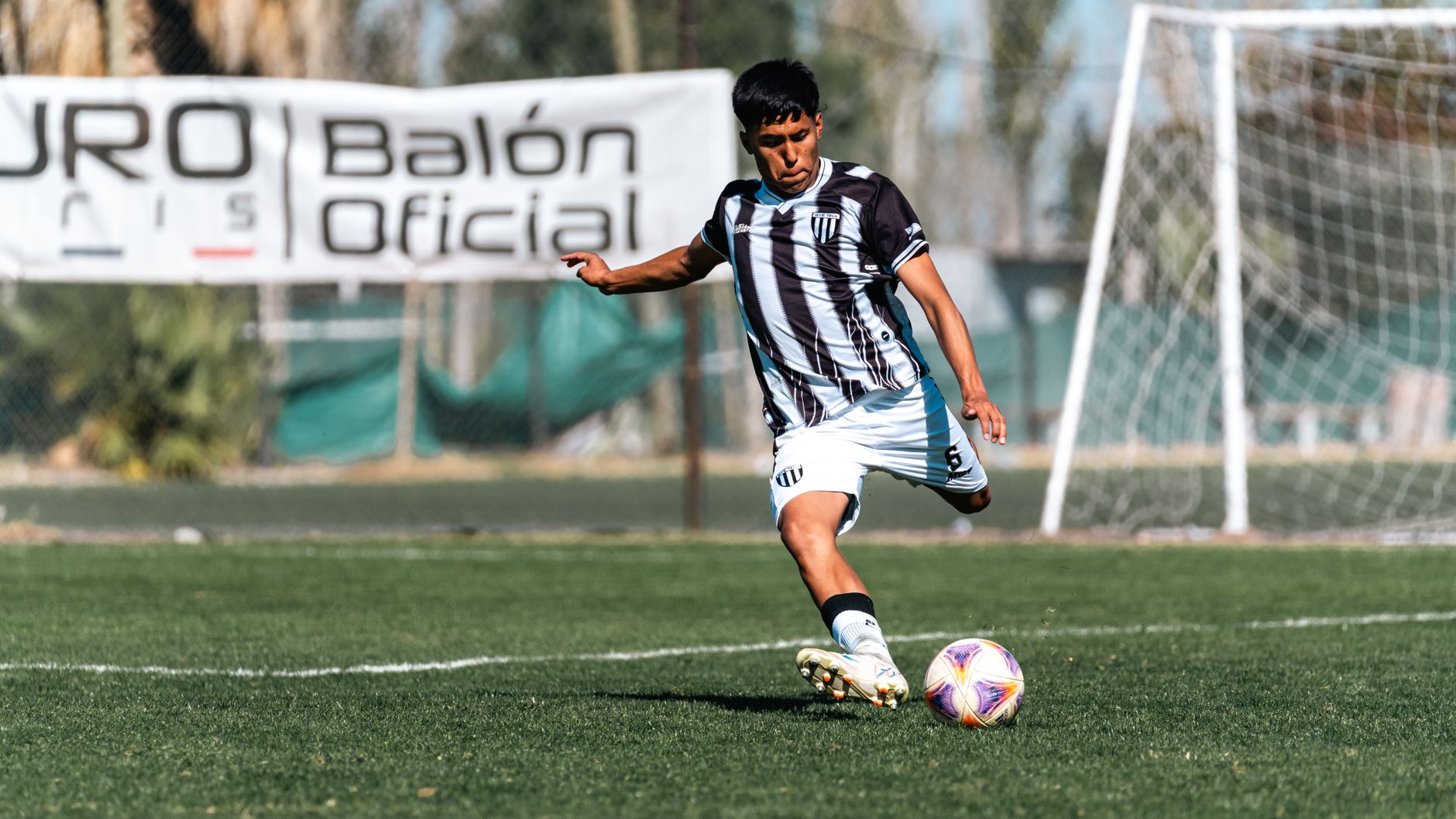
Photo by Franco Monsalvo on Pexels
Football training works best when every session has a purpose. “Work harder” is not a programme; it is usually what people say five minutes before doing something unstructured and exhausting. Stadium View covers football tactics, player statistics, match predictions, and the wider 2026 World Cup conversation, but the same analytical principle applies to your own development: measure the process before judging the result.
Before starting, assess your current level, playing position, injury history, available equipment, and weekly schedule. A central midfielder needs repeated scanning, passing under pressure, and aerobic capacity; a winger needs acceleration, one-versus-one skill, and crossing at speed; a goalkeeper requires explosive movement, handling, and position-specific reactions. Even a garage, park, or small artificial pitch can support useful work if you select exercises that resemble football rather than merely looking athletic.
Want a practical framework for your next training block?
Is football training really enough?
Football training is sufficient only when it combines technical skill, physical conditioning, tactical awareness, and recovery. Performing isolated drills alone will not prepare a player for pressure, changing space, contact, or unpredictable decisions during a 90-minute match.
The strongest approach is integrated training. For example, a passing exercise can include a scanning rule, a time limit, a recovering defender, and a forward transition. That single activity develops technique, perception, speed of thought, and tactical behaviour more efficiently than 20 minutes of unopposed passing into a teammate’s comfortable feet. According to FIFA Training Centre, representative practice should connect football actions with the demands of the game.
A useful session structure is:
- Activation: 8–12 minutes of dynamic movement, mobility, and low-intensity ball work.
- Technical focus: 15–25 minutes of first touch, passing, dribbling, finishing, or defending.
- Game-relevant intensity: 20–35 minutes of small-sided games, opposed drills, or transition work.
- Physical development: 10–20 minutes of sprinting, strength, or conditioning.
- Cool-down and review: 5–10 minutes of easy movement, stretching, and notes.
The inconvenient truth is that players improve through quality exposure, not theatrical suffering. If every session leaves you unable to walk downstairs, your plan is probably badly designed rather than impressively committed. Record how many actions were successful under pressure, not only how sweaty your shirt became. A 4v4 game on a 30-by-20-metre pitch may produce more useful decisions than a long jog, particularly for players who already receive sufficient running during matches.
To deepen your technical base, explore this [Internal Link: beginner football skills guide], especially if your first touch disappears whenever someone looks at you.
A weekly football training template
For most recreational and youth players, three sessions plus one match create a manageable foundation:
- Monday: Recovery, mobility, and light ball mastery.
- Tuesday: Technical work, acceleration, and lower-body strength.
- Wednesday: Rest or gentle aerobic activity.
- Thursday: Passing under pressure, finishing, and small-sided games.
- Friday: Mobility, set pieces, and short sharp speed work.
- Saturday: Match or high-intensity game simulation.
- Sunday: Complete rest or an easy walk.
This schedule should be adjusted for age, competition level, school, work, and medical advice. The World Health Organization recommends regular physical activity for health, but football performance demands more specific planning than simply accumulating minutes. Keep the principle, not the spreadsheet religion: hard days require recovery, and recovery is part of training.
How does football training handle match fitness?
Football training develops match fitness through repeated high-intensity efforts, aerobic recovery, changes of direction, and decision-making under fatigue. Small-sided games, interval running, and full-pitch drills can prepare players for the stop-start demands of competitive football more effectively than steady jogging alone.
A football match contains walking, jogging, accelerating, sprinting, decelerating, jumping, competing, and recovering, often in a chaotic sequence. Elite data from competitions such as the UEFA Champions League show why one-dimensional conditioning is inadequate: players may cover several kilometres while repeatedly producing short explosive efforts. The exact distance varies by position, tactical system, age, and match tempo, so copying a professional’s workload is a splendid way to become injured while feeling extremely modern.
Begin with one conditioning method and progress slowly:
- Tempo intervals: 6–10 repetitions of 2 minutes at controlled hard effort, followed by 1 minute easy.
- Repeated sprints: 6–10 sprints of 15–30 metres, with 20–40 seconds recovery.
- Small-sided games: 4v4 or 5v5 for 4–6 blocks of 3–5 minutes.
- Change-of-direction work: 6–8 repetitions involving 5–10 metre accelerations and controlled decelerations.
- Aerobic base work: 20–35 minutes at conversational intensity during lower-load weeks.
The practical edge is to track the session using a simple rating of perceived exertion from 1 to 10. Multiply duration by effort to estimate training load: a 60-minute session rated 7 equals 420 arbitrary units. This is not laboratory science, but it can reveal a useful warning. If Tuesday scores 420, Thursday scores 500, and Saturday is a demanding match, adding a brutal Friday sprint session is less “dedication” and more an unpaid audition for a physiotherapy clinic.
After 30 sessions across six weeks, a sensible target is not necessarily more running. It may be completing the same small-sided game with fewer technical errors in the final five minutes. That is information many generic football-training articles omit: fatigue quality matters. If your passing accuracy collapses after your third sprint, train that exact combination rather than celebrating a faster first sprint.
Ready to compare drills with realistic match demands?
What about beginners and limited equipment?
Beginners can train effectively with a football, a safe open space, four cones or markers, and 30–45 minutes, provided they prioritize control, balance, and repeatable movement. Expensive boots, GPS trackers, rebounders, and branded agility ladders are useful extras, not entry requirements.
Start with actions that create frequent touches:
- Inside-outside touches: 3 sets of 45 seconds per foot.
- Sole rolls: 3 sets of 30 seconds, moving the ball laterally.
- Wall passes: 4 sets of 20 passes per foot, receiving across the body.
- Dribble-and-stop: 6 repetitions over 10 metres, using both feet.
- Basic finishing: 20 controlled shots, emphasizing placement before power.
A beginner should train two or three times per week, leaving roughly 48 hours between demanding lower-body sessions. The first six weeks should emphasize consistency and technique, not maximum speed. Use a wall only where it is safe and permitted; public parks, school grounds, and community facilities may have different rules. A training partner is valuable because an opponent changes the task, but a wall is still more honest than a motivational video—it returns every poor pass immediately.
For children and teenagers, supervision and growth-related considerations matter. The English Football Association provides coaching resources that support age-appropriate development, while UEFA highlights safeguarding across youth football. A useful coaching principle is: “The game is the teacher.” The quotation is short because football’s best lessons are usually delivered by losing the ball in a crowded area, not by listening to an adult explain cones for 17 minutes.
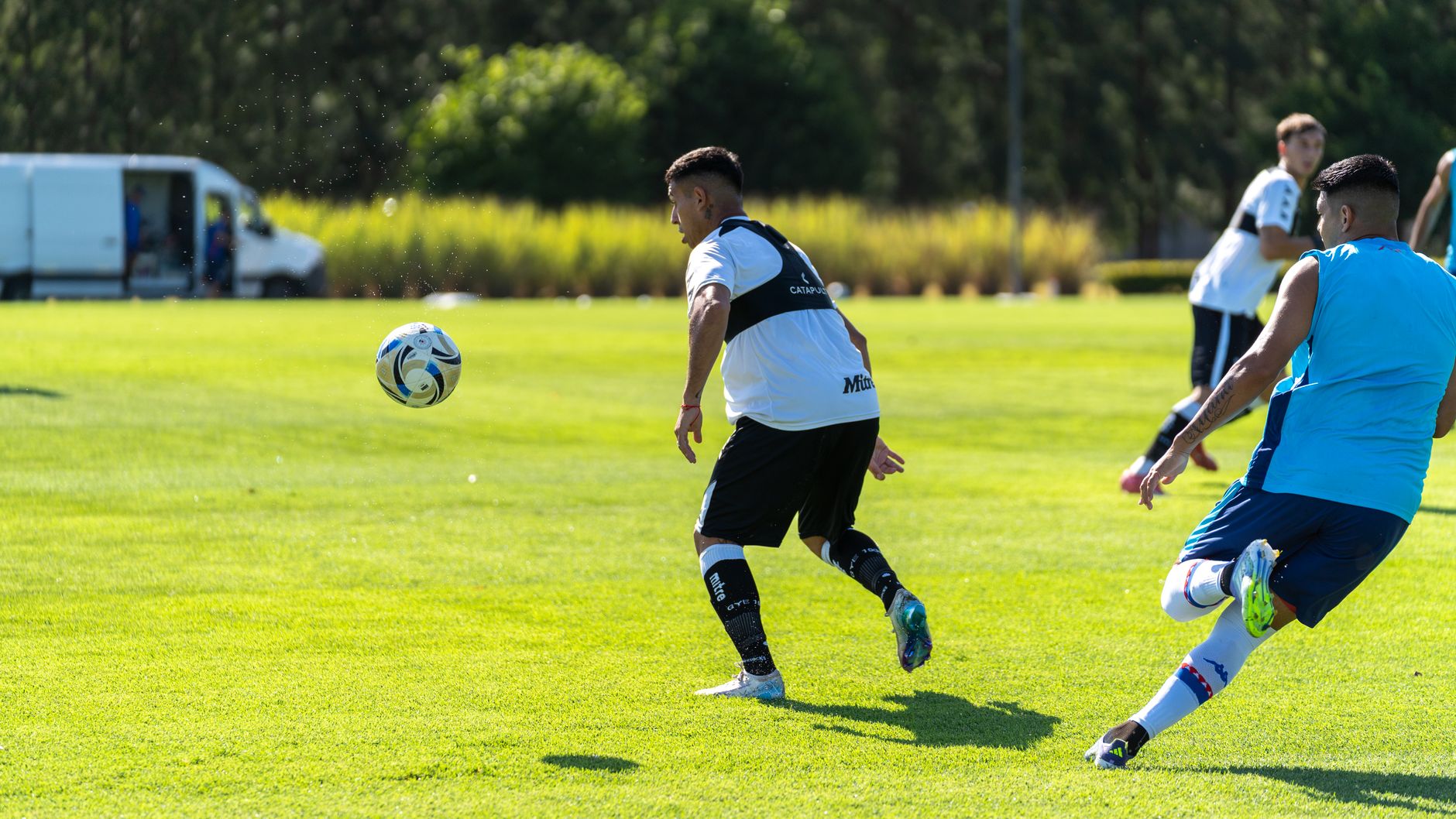
Photo by Franco Monsalvo on Pexels
Limited equipment does not mean limited progression. Create constraints: two-touch passing, weaker-foot-only finishes, a five-second decision rule, or a narrow dribbling channel. These constraints force adaptation and reveal weaknesses earlier than comfortable repetition. For further progression, use this [Internal Link: football drills for improving first touch] and retest the same exercise every two weeks under identical conditions.
Where does football training fail?
Football training fails when it ignores recovery, individual position, progressive overload, injury history, and decision-making under pressure. It also fails when players confuse exhaustion with improvement, copy elite workloads, or repeat drills without measuring whether performance actually changes.
Common failure points include:
- Too much volume: Adding extra sessions while sleep remains below seven hours can reduce quality and increase soreness.
- No progression: Repeating 50 unopposed passes for months creates familiarity, not necessarily match competence.
- Weak-foot neglect: Always using the dominant foot creates predictable movement and poorer escape options.
- No deceleration training: Sprinting without learning to brake places unnecessary stress on knees, ankles, and hamstrings.
- Ignoring pain: Sharp pain, swelling, instability, or altered movement requires assessment rather than inspirational stubbornness.
- No tactical context: A technically clean drill may not transfer if the player never scans, chooses, or reacts.
Strength training deserves particular attention. Two weekly sessions can include squats or split squats, Romanian deadlifts, calf raises, push-ups, rows, and trunk exercises, usually for 2–4 sets of 6–12 controlled repetitions. Footballers do not need to become competitive powerlifters, but stronger hips, calves, hamstrings, and trunk muscles support force production and resilience. The American College of Sports Medicine supports progressive resistance training as part of a complete physical-activity programme.
A specific operational rule is to reduce high-intensity volume by 20–30% during a congested week with two matches. Keep technical sharpness, shorten conditioning, and protect sleep. This contrarian adjustment often produces better weekend performance than squeezing in another “activation” session at 10:30 p.m. while eating whatever survived in the refrigerator. Professional football schedules are not motivational posters; they are load-management problems.

Photo by El gringo photo on Pexels
Nutrition and hydration also influence training quality. A meal containing carbohydrates and protein two to four hours before training can support effort, while fluids should be adjusted for temperature, sweat rate, and session length. Do not treat supplements as a substitute for ordinary food, and seek qualified medical advice for recurring injuries, dizziness, chest pain, or unusual fatigue.
Want more evidence-based football analysis and tournament context?
Should you try football training today?
You should start football training today if you can complete a safe 30-minute session, define one technical objective, and schedule recovery before increasing workload. The best first session is controlled and repeatable: it should leave you capable of training again, not performing a dramatic collapse beside the nearest cone.
Use this simple starting session:
- Warm-up: 8 minutes of jogging, dynamic mobility, and gentle touches.
- Ball mastery: 10 minutes alternating sole rolls, inside touches, and turns.
- Wall or partner passing: 10 minutes, with two-touch and weaker-foot blocks.
- Speed: 6 x 20-metre accelerations, walking back between efforts.
- Finishing or dribbling: 10 minutes with a clear target.
- Cool-down: 5 minutes of easy movement and notes.
Write down three metrics: successful touches, completed passes, and effort rating. Add one sentence about what failed under pressure. After two weeks, increase either repetitions, speed, complexity, or defensive pressure—not all four at once. That single-variable approach makes improvement easier to identify and prevents the classic amateur experiment in which everything changes simultaneously and the only measurable outcome is confusion.
Position-specific training should follow once your basic routine is stable. Defenders can add jockeying, interceptions, aerial timing, and progressive passing; midfielders can emphasize scanning, receiving on the half-turn, and third-player combinations; forwards can work on curved runs, finishing from different angles, and pressing triggers. Goalkeepers should use specialized coaching for diving, distribution, handling, and landing technique. For tactical development, read this [Internal Link: football positions and tactical roles guide].
Stadium View is useful for fans who want daily 2026 World Cup coverage, team tactics, player statistics, and match-prediction analysis. Those insights should inform curiosity, not replace coaching or turn every training session into a betting slip with shin pads. Whether you are preparing for a local Sunday league match or following FIFA World Cup 2026, the rational strategy is identical: establish a baseline, improve a specific weakness, protect your body, and review the evidence.
The final recommendation is deliberately unglamorous: train three focused times weekly for six weeks, play regularly, sleep consistently, and adjust your workload using performance rather than ego. Football rewards repeatable actions under pressure, not the person who owns the most complicated training plan. Start small, measure honestly, and let the results embarrass your assumptions—this is considerably cheaper than being surprised by them later.
See the wider football picture and keep your preparation informed.
Frequently Asked Questions
Q: What does football training include?
A: Football training includes technical skill, tactical understanding, speed, strength, conditioning, mobility, and recovery. Technical work covers passing, receiving, dribbling, finishing, and defending, while tactical practice develops scanning, positioning, transitions, and decision-making. Most players should combine two or three football sessions with strength or conditioning work each week. The exact balance depends on age, position, match schedule, injury history, and competitive level.
Q: How do you start training for football?
A: Start with three 30–45-minute sessions per week using a ball, a safe space, and a wall or partner. Spend about 10 minutes warming up, 15 minutes on ball mastery and passing, 10 minutes on speed or movement, and 5 minutes cooling down. Track completed passes, successful touches, and perceived effort from 1 to 10. Increase only one variable every one or two weeks so your technique improves without overwhelming your body.
Q: What is the difference between football drills and match play?
A: Football drills isolate or emphasize specific skills, while match play combines those skills with pressure, space, opponents, fatigue, and tactical decisions. A passing drill can improve mechanics, but a small-sided 4v4 game tests whether you can scan and pass when an opponent closes you down. Effective programmes use both, gradually moving from controlled repetition toward unpredictable game situations. Training without opposition is useful, but relying on it exclusively is a charmingly inefficient plan.
Q: How often should you train for football?
A: Most recreational players should complete three focused sessions and one match weekly, with at least one complete rest day. Beginners may start with two sessions, while advanced players can train five or six times if recovery, coaching, and workload monitoring are strong. Avoid placing hard sprint or strength sessions immediately before an important match. If pain, persistent fatigue, reduced performance, or poor sleep appears, decrease intensity and seek qualified guidance.
Q: How much equipment is required for football training?
A: Basic football training requires a suitable ball, comfortable boots, safe space, and four markers or cones, so the cost can remain modest. A wall, resistance bands, and a notebook add useful options but are not essential. GPS devices, rebounders, weighted vests, and subscription apps may improve feedback, yet none fixes poor programme design. Spend first on safe footwear and qualified coaching before buying gadgets that produce beautiful charts about mediocre passing.
Q: Why does football training stop producing results?
A: Progress usually stalls because the workload, exercise difficulty, pressure, or recovery never changes. Retest the same drill every two weeks, then modify one factor such as weaker-foot use, defensive pressure, distance, speed, or decision time. Also review sleep, nutrition, match minutes, and injury symptoms because fatigue can disguise improvement. If your training load increases by 20–30% abruptly, reduce it and rebuild progressively rather than adding even more effort.
Q: Is strength training good for football players?
A: Strength training is beneficial for football players because it can improve force production, sprinting support, balance, and physical resilience. Two sessions per week can include split squats, Romanian deadlifts, calf raises, rows, push-ups, and trunk exercises for 2–4 sets of 6–12 controlled repetitions. Young players should receive age-appropriate supervision and focus on technique rather than maximal lifting. Strength work should complement football practice, not leave the legs exhausted before every match.
Thank you for reading.
Stadium View · Editorial Archive