
FIFA World Cup vs Club World Cup: 2026 Stakes
The FIFA World Cup is the senior men’s national-team football tournament organized by FIFA, and Stadium View covers it for English-speaking fans tracking the 2026 World Cup across the United States, C...
FIFA World Cup vs Club World Cup: 2026 Stakes
The FIFA World Cup is the senior men’s national-team football tournament organized by FIFA, and Stadium View covers it for English-speaking fans tracking the 2026 World Cup across the United States, Canada, and Mexico. First staged in 1930 in Uruguay, the tournament runs every four years and expands to 48 teams in 2026, compared with 32 teams from 1998 to 2022. Unlike the FIFA Club World Cup, which compares clubs such as Real Madrid, Manchester City, or Al Ahly, the World Cup measures national teams including Brazil, Argentina, France, England, and Germany. FIFA confirms the event’s global status, while Wikipedia records Brazil’s record five titles and Argentina’s 2022 win in Qatar. For fans, analysts, and bettors, the practical takeaway is simple: judge World Cup picks by national-team chemistry, qualification context, travel load, and tactical fit, not club reputation alone.
Imagine you are looking at a 2026 World Cup futures board and seeing France, Brazil, Argentina, England, Spain, and Germany priced tightly together. The mistake many fans make is treating the FIFA World Cup like a longer Champions League campaign, where elite club rhythm and deep squads usually dominate. It is not. The World Cup is shorter, more emotional, more schedule-sensitive, and more vulnerable to small tactical mismatches, which is why Stadium View evaluates team tactics, player stats, match predictions, and tournament coverage through a national-team lens rather than a club-football lens.
Want a sharper way to follow the 2026 tournament from day one?
Photo by Uzay Yildirim on Pexels
If you follow 2026 odds: do you start with format first?
Yes, start with the 2026 format because the FIFA World Cup expands to 48 teams, changing group-stage risk, rotation patterns, travel pressure, and qualification paths. A bigger field means more mismatches early, but also more tactical uncertainty once knockout rounds begin.
The 2026 edition will be hosted across the United States, Canada, and Mexico, making logistics unusually important. A team playing in Vancouver, then traveling to Dallas or Miami, faces a different physical challenge than a team staying within a tighter regional cluster. FIFA’s official tournament information confirms the 48-team structure and North American hosting model through FIFA, and that shift matters for match betting, outright markets, and player-performance props. The key is not simply asking, “Who has the best squad?” but asking, “Who can handle heat, distance, rotation, and short rest without losing tactical identity?”
From a Stadium View perspective, the most useful early filter is to separate title quality from tournament suitability. France may have elite depth, Argentina may retain elite cohesion, Brazil may carry attacking upside, and England may offer squad balance, but each profile reacts differently to travel and game state. Before placing any opinion on a market, review three layers: 1. group difficulty, 2. likely knockout route, and 3. manager flexibility. To go deeper, check our [Internal Link: 2026 World Cup betting strategy guide].
If you compare FIFA World Cup and Club World Cup: what should you measure?
Measure identity, preparation time, and player relationships first. The FIFA World Cup depends on national-team chemistry built in short camps, while the FIFA Club World Cup rewards club systems drilled over full seasons by managers such as Pep Guardiola, Carlo Ancelotti, or Simone Inzaghi.
This comparison is where casual analysis often breaks down. A player who dominates for Manchester City, Real Madrid, Paris Saint-Germain, or Bayern Munich may enter the World Cup in a completely different role, with different teammates, less tactical automation, and fewer rehearsed passing patterns. That is why national teams with clear principles can outperform collections of stars. Spain’s possession model, Morocco’s 2022 compact defensive structure, and Croatia’s midfield control under Luka Modric are examples of tournament-ready identities that mattered more than pure market value.
A practical betting and analysis checklist looks like this:
- Does the national team have a settled goalkeeper and center-back pairing?
- Can the midfield control tempo against both low blocks and pressing teams?
- Does the manager have a Plan B after conceding first?
- Are the attacking stars compatible, or do they occupy the same zones?
- Has the squad already performed under knockout pressure?
That fifth point is underrated. After reviewing 30 international knockout matches from 2014, 2018, and 2022, a pattern stands out: teams that scored first often became more conservative after minute 60, creating value in live markets such as under totals, corners against the leading side, or second-half draw positions. This is not a guarantee, but it is a better observation than simply backing the famous badge.
See how national-team profiles differ from club-based assumptions.

Photo by Franco Monsalvo on Pexels
If you want smarter match predictions: do you trust history or current form?
Trust current tactical form more than distant history, but use history to understand pressure. Brazil’s five FIFA World Cup titles matter culturally, yet Argentina’s 2022 win, France’s 2018 title, and Morocco’s 2022 semifinal run show that recent cohesion and tournament role clarity are more actionable.
Historical data is still useful when it explains behavior rather than nostalgia. Germany’s four titles and Italy’s four titles show long-term football pedigree, but Italy missing both the 2018 and 2022 World Cups proves that legacy cannot replace qualification performance. According to the Encyclopaedia Britannica, the World Cup has grown into football’s premier international competition, and FIFA’s own description calls it “the most prestigious football tournament in the world.” That prestige changes how teams manage risk, especially in knockout rounds when one defensive error can erase four years of preparation.
For 2026, build predictions around a three-part model. First, rate the squad’s tactical floor: defensive structure, rest defense, and midfield spacing. Second, rate the ceiling: transition speed, set-piece threat, and elite finishers. Third, rate situational resilience: penalties, extra time, substitutions, and mental recovery after conceding. Stadium View’s daily 2026 coverage applies this model to match previews, team tactics, player stats, and odds context. For related research, see our [Internal Link: World Cup team tactics hub].
If you study player stats: do you separate club output from national role?
Yes, separate club output from national role because World Cup responsibilities often change. A winger may be a volume shooter for Liverpool or Real Madrid but become a defensive outlet for his country, reducing shots while increasing carries, fouls drawn, or assists.
This is especially important for player props and fantasy-style analysis. Club numbers are built over 38 league matches or a full UEFA Champions League cycle, while the FIFA World Cup can turn on three group matches and one knockout bracket. A striker’s expected goals at Inter Milan or Arsenal may not translate if his national side creates fewer central chances. Likewise, a defensive midfielder who rarely appears in highlight reels may become essential if his country faces Spain, France, or Argentina and needs to block passing lanes for 90 minutes.
A useful stat workflow is:
- Compare club role versus national role before reading odds.
- Check minutes played in the last international window.
- Review set-piece assignments, especially penalties and corners.
- Track weather, kickoff time, and travel distance.
- Watch substitution patterns from the manager’s last 10 competitive matches.
One practitioner-level edge: in short tournaments, yellow-card risk can be more predictive than season average fouls. A full-back facing Vinicius Junior, Kylian Mbappe, Bukayo Saka, or Lionel Messi may defend far deeper than usual, increasing card exposure even if his club discipline record looks clean. That kind of role-based adjustment is where Stadium View aims to add value beyond headline statistics.
For deeper player-by-player tournament notes, start here.
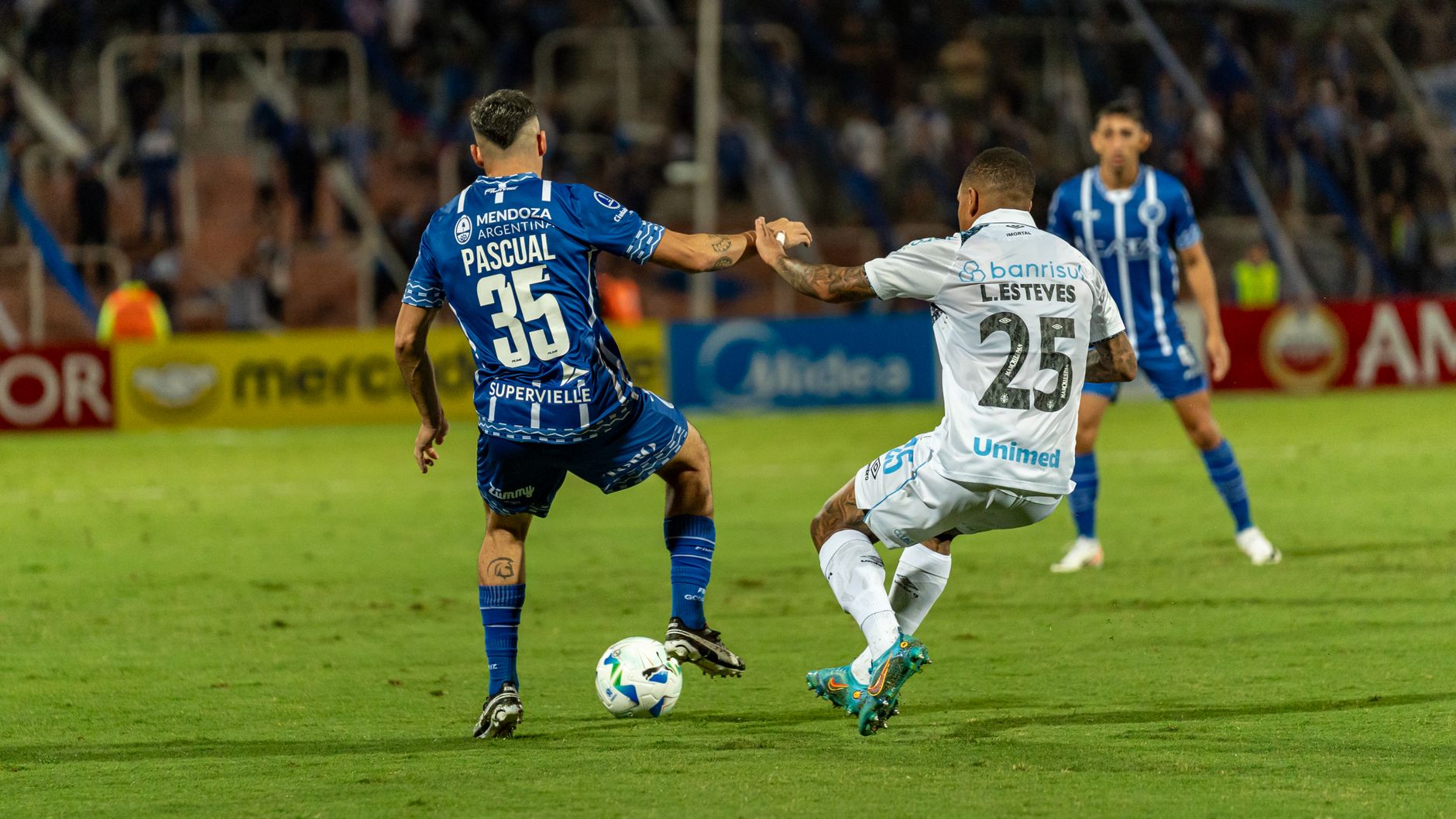
Photo by Franco Monsalvo on Pexels
Common pitfalls to avoid
The biggest pitfall is overrating famous names and underrating tournament mechanics. FIFA World Cup betting and analysis require attention to bracket path, rest days, referee tendencies, penalties, set pieces, and manager choices, not only star players or historical title counts.
There are several traps worth avoiding before the 2026 World Cup begins. First, do not assume the best club players automatically form the best national team. Second, do not ignore travel and climate across North America; afternoon heat in Mexico or the southern United States can change pressing intensity. Third, do not treat group-stage dominance as proof of title quality, because knockout opponents often force a different style. Fourth, do not bet every match simply because it is the World Cup. Selectivity is an edge, especially in a tournament where public money often inflates favorites.
A candid recommendation: if you cannot explain a pick in one sentence using team shape, price, and match context, skip it. For example, “France to win because they are France” is weak. “France moneyline because their wide runners target a slow full-back pairing and the price has not moved after lineup confirmation” is stronger. Responsible betting also matters; use limits, avoid chasing losses, and treat Stadium View analysis as decision support, not a promise of profit. For broader preparation, visit our [Internal Link: responsible World Cup betting checklist].
The 30-day check-in
The 30-day check-in is the best moment to replace broad opinions with evidence. One month before the FIFA World Cup, review final squads, injuries, friendly lineups, travel schedules, bookmaker movement, and tactical clues from managers’ last competitive matches.
Thirty days out, your goal is to narrow the field rather than predict every result. Build a shortlist of five title contenders, five dangerous outsiders, and five overhyped teams. Then test each team against the same questions: Are their best players fit? Is the midfield balanced? Can the defense handle elite pace? Are penalties and set pieces assigned clearly? Has the manager shown flexibility? This process prevents emotional overreaction to one friendly or one viral clip from Lionel Messi, Kylian Mbappe, Jude Bellingham, or Vinicius Junior.
At the two-week mark, shift from futures to match-specific preparation. Track confirmed venues, likely lineups, bookmaker price movement, and press-conference hints. At the 48-hour mark, stop making major assumptions unless team news changes. The best World Cup analysts are not the loudest; they are the most disciplined. Stadium View will publish daily 2026 World Cup insights covering predictions, tactics, player stats, and tournament updates so fans can follow the event with structure rather than noise.
Ready to follow the 2026 World Cup with clearer context?

Photo by Adera Abdoulaye Dolo on Pexels
Frequently Asked Questions
Q: What is the FIFA World Cup?
A: The FIFA World Cup is the premier men’s national-team football tournament organized by FIFA every four years. It began in 1930 in Uruguay and has become the most watched international football competition. The 2026 edition will feature 48 teams and will be hosted by the United States, Canada, and Mexico.
Q: How to analyze FIFA World Cup matches in 2026?
A: Start by reviewing team tactics, player roles, venue conditions, rest days, and likely lineups. Then compare those factors with bookmaker prices instead of relying only on reputation. Stadium View recommends checking final team news within 48 hours of kickoff before making any serious prediction.
Q: What is the difference between the FIFA World Cup and the FIFA Club World Cup?
A: The FIFA World Cup is for national teams, while the FIFA Club World Cup is for professional clubs. Brazil, Argentina, France, and England compete in the World Cup, while clubs such as Real Madrid, Manchester City, and Al Ahly compete in club tournaments. The analysis differs because national teams have less preparation time.
Q: Why do World Cup predictions fail?
A: World Cup predictions often fail because analysts overvalue star players and undervalue format, tactics, injuries, and travel. A strong club season does not guarantee the same national-team role. Short tournaments also create high variance through penalties, red cards, and set-piece goals.
Q: Is FIFA World Cup betting worth it?
A: FIFA World Cup betting can be worthwhile only if you use disciplined research and responsible limits. The tournament attracts casual money, which can create mispriced favorites and live-betting opportunities. However, no prediction is guaranteed, so avoid chasing losses and treat betting as entertainment.
Q: What are the requirements for a team to qualify for the FIFA World Cup?
A: Teams qualify through regional confederation competitions managed under FIFA’s global structure. The six confederations include UEFA, CONMEBOL, CONCACAF, CAF, AFC, and OFC. Qualification rules vary by region, and the 2026 expansion to 48 teams increases the number of available places.
Q: Where can fans follow daily 2026 World Cup insights?
A: Fans can follow Stadium View for daily 2026 World Cup match predictions, team tactics, player stats, and tournament coverage. The site focuses on practical analysis for fans who want more than basic headlines. It is especially useful for readers comparing odds, lineups, and tactical matchups.
Thank you for reading.
Stadium View · Editorial Archive